The holidays have a marketing department. You see it every November: polished commercials, curated table settings, forced smiles, and the polished assumption that everyone is happy, together, grateful, and spiritually fulfilled. But the reality is different. For a lot of people, the holidays are the darkest stretch of the year. And if no one says that out loud, the suffering only deepens.
This isn’t about being cynical. Quite the opposite. It is about telling the truth so we can finally live the meaning that the holidays pretend to represent.
Stress, Loneliness, and the Holiday Blues - The Reality Behind the Cheer
According to recent surveys by the American Psychological Association, nearly 90 percent of adults say they experience stress during the holidays. Another APA survey reports that 41 percent of Americans feel more stressed during the holidays than any other time of year. NAMI has found that people report loneliness (66 percent), pressure (63 percent), and unrealistic expectations (57 percent) as their top emotional struggles.
These aren’t fringe numbers. This is the majority.
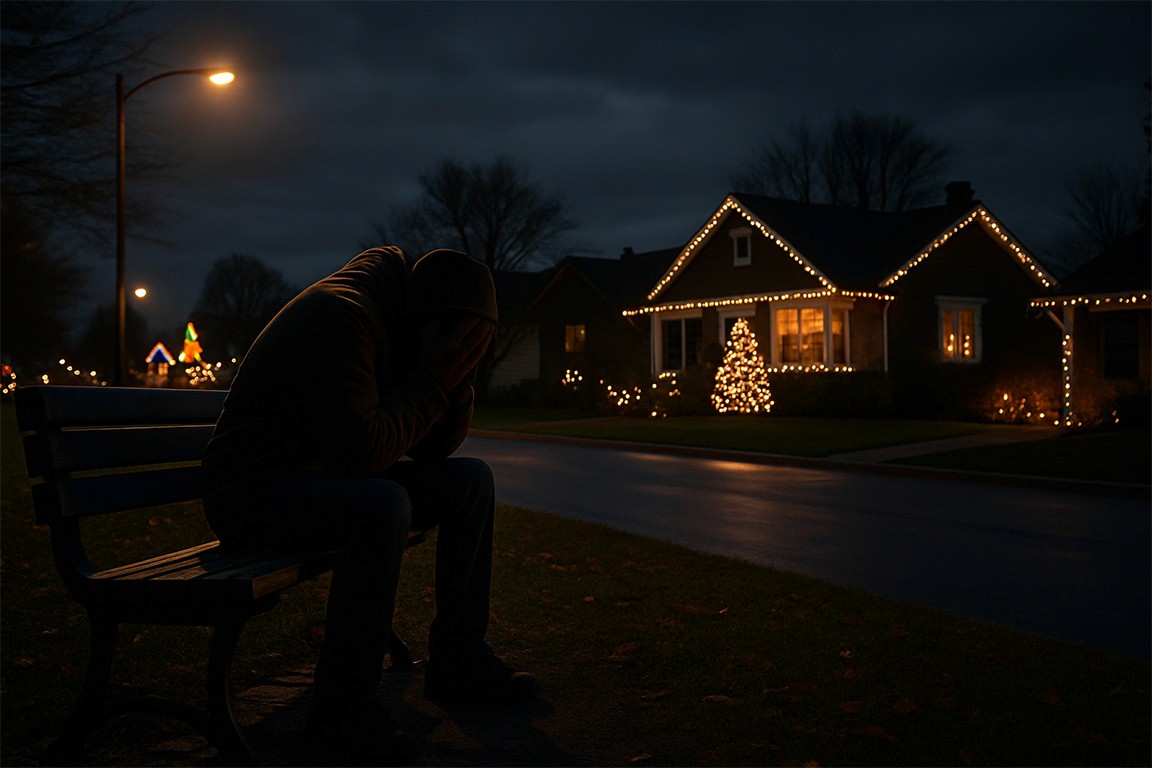
And yet, every year, millions of people quietly suffer behind the glowing lights and “perfect family” photos. Loss hits harder. Silence in a house hits louder. Social pressure becomes overwhelming. In families held together with thin emotional thread, that thread snaps.
The holidays don’t create darkness. They reveal it.
La Cañada Flintridge - The Nice Suburb Where Pain Slips Through the Cracks
If you grew up in a place like La Cañada Flintridge, you know this dynamic intimately. Beautiful homes. Polished streets. Kids driving cars way above their maturity level. A culture where being “fine” is required and anything less is treated like a stain.
When you grow up surrounded by the wealthy kids who mock you for not having money, and teachers who look the other way, you learn the real meaning of the bystander effect long before psychology textbooks ever mention it. No one steps in. No one helps. Not because they are evil, but because everyone assumes someone else will handle it. Or worse, they pretend nothing is happening at all.
That is the same cultural phenomenon that plays out during the holidays. Pain becomes invisible under social pressure. People assume the “holiday spirit” will fix everything, and so they do nothing. The bystander effect wrapped in tinsel.
Thanksgiving - A Holiday Built on a Contradiction
And then there is Thanksgiving itself. Americans treat it like the simplicity of a Hallmark card: a wholesome feast between Pilgrims and Native Americans. But the real history is not peaceful, simple, or harmonious.
The Wampanoag people didn’t gather out of “friendship.” They were navigating survival in the face of disease, land loss, and foreign encroachment. After that first symbolic feast, the following decades brought violence, displacement, massacres, and systematic erasure.
Many Native families treat Thanksgiving as a Day of Mourning. And they are right to feel that way.
So what are we celebrating?
The uncomfortable truth is that the historical foundation is dark. But the idealistic meaning behind the holiday is good. Gratitude is good. Community is good. Taking care of each other is good.
The contradiction is that we pack those values into one day a year and then promptly forget them.
Imagine if someone said they loved you only on your birthday.
That is the American holiday model.
The Bystander Effect in Holiday Form
The bystander effect isn’t just about emergencies. It is about social invisibility. During the holidays:
People assume others have supportive families.
People assume someone else invited the lonely neighbor.
People assume someone else checked in on the person who disappeared from their social circles.
People assume their struggling friend “must be busy.”
And because everyone assumes, no one acts.
That is how people fall through the cracks in suburbs like La Cañada Flintridge. That is how people fall through the cracks everywhere.
The holiday season trains society to perform gratitude instead of practice it.
So How Do We Make Holidays Better for Everyone?
Here is where we flip the script.
1. Treat gratitude as a daily practice, not a seasonal performance.
Thankfulness means nothing if it is limited to one meal. Gratitude becomes real when it is woven into everyday interactions, decisions, and relationships.
2. Break the bystander pattern.
If you sense someone is struggling, you are the one meant to step in. Assume no one else will. A text, an invite, a check-in, or even a small gesture can snap someone out of the isolation spiral.
3. Expand the holiday table.
Not everyone has family. Not everyone has a place to go. Not everyone fits the Thanksgiving postcard. Invite people who otherwise wouldn’t have a seat.
4. Acknowledge the real history.
You don’t need to cancel Thanksgiving. You just need to tell the truth about it and let that truth deepen your sense of compassion. Honor Indigenous communities. Learn the real story. Support Native-led organizations.
5. Notice the invisible.
Many people hide their pain during the holidays. Pay attention. Listen without pushing. Offer support without forcing it.
6. Replace tradition with intention.
If a holiday tradition causes harm, stress, or fake happiness, change it. Build new rituals that are actually healthy.
7. Stop treating perfection as a requirement.
The holidays are messy because humans are messy. That is normal. Drop the performance. Choose authenticity.
The Real Meaning of the Holidays Isn’t in November - It Is in the Other 364 Days
Here is the core truth:
You don’t show your love on one day.
You don’t show your gratitude on one day.
You don’t show your compassion on one day.
If Thanksgiving were real, America wouldn’t need it. Gratitude would already be happening every day. Community would already be happening. Support would already be happening. And no one would fall through the cracks because everyone would feel seen.
The dark side of the holidays only has power because the light we pretend to have is temporary.
Imagine if we made it permanent.
NEVER MISS A THING!
Subscribe and get freshly baked articles. Join the community!
Join the newsletter to receive the latest updates in your inbox.